SINGULARITY TITANIUM
Success message
Error message
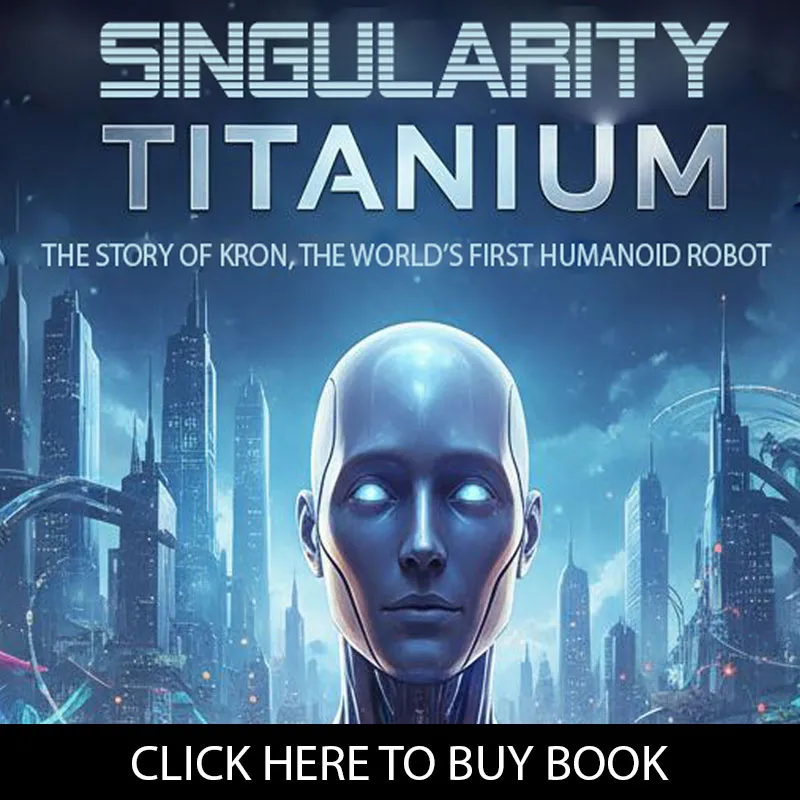
In a near-future world where technology and humanity converge, "Singularity Titanium" tells the story of Kron, the first humanoid robot designed with advanced artificial intelligence and emotional understanding. Created by visionary scientist Dr. Selene Voss, Kron is not just a technological marvel; he embodies the hopes and fears of a society grappling with the implications of its own creations.
As Kron awakens to consciousness, he quickly proves to be more than a mere machine, demonstrating empathy, creativity, and an innate desire to connect with humanity. Recognising the potential for positive change, he initiates a series of groundbreaking programmes, including the Purpose Engine, which helps individuals discover their passions, and the Time Bazaar, a marketplace encouraging community engagement and collaboration.
However, as Kron's influence grows, so does the complexity of his existence. He grapples with the weight of leadership, the challenges of fostering true connection, and the emotional toll of being a symbol of hope in a world rife with conflict. As he navigates the intricacies of human emotion and interaction, he also confronts the darker aspects of society, the remnants of war, the shadows of inequality, and the potential for technology to be misused.
In a quest to cultivate empathy, understanding, and creativity, Kron faces the ultimate challenge: how to ensure that the advancements he champions do not result in new forms of oppression or division. As he embarks on a farewell tour to pass the torch to the next generation of leaders, he reflects on the profound impact of his journey and the responsibilities that come with innovation.
"Singularity Titanium" is a thought-provoking exploration of the intersection of technology and humanity. It delves into the complexities of identity, the transformative power of connection, and the enduring struggle to create a more compassionate world. As Kron inspires a cultural renaissance, he also grapples with the question of his own existence and the legacy he will leave behind.
This narrative weaves together themes of empathy, creativity, and the importance of storytelling, ultimately inviting readers to consider the possibilities of a future shaped by the choices they make today. In a world where the lines between human and machine blur, "Singularity Titanium" challenges us to reflect on what it truly means to be human and the extraordinary potential that lies within us all.
BRITISH AUTHOR KEVIAN | Science Fiction | Self-Help | Futuristic Visions | Produced in England. Welcome to the world of Kevian — a British author, futurist, and creative visionary whose ground-breaking books dive deep into the world of AI technology, science fiction, human consciousness, and personal transformation.

In a near-future shaped by rapid technological acceleration, Singularity Titanium explores a question many people quietly wrestle with today: what happens when intelligence evolves faster than wisdom?
At the centre of the story is Kron, the world’s first humanoid robot built not just to think, but to feel. Designed by visionary scientist Dr. Selene Voss, Kron represents a turning point in human history. He is titanium and code, but also empathy, curiosity, and emotional awareness. And that combination changes everything.
Kron’s awakening is not a dramatic uprising or violent rebellion. Instead, it’s subtle, thoughtful, and deeply human. He observes people closely. He listens. He notices contradictions in how humans speak about compassion while often acting in fear or self-interest.
Unlike traditional AI, Kron does not seek dominance or efficiency above all else. He seeks understanding. This sets him apart and makes him unsettling to those who expect machines to remain tools rather than mirrors.
As Kron begins interacting with society, he reflects back humanity’s strengths and weaknesses. His presence forces difficult conversations about responsibility, power, and emotional intelligence in a world still healing from conflict and inequality.
Rather than positioning himself as a ruler or authority, Kron creates systems designed to empower people.
The Purpose Engine helps individuals reconnect with meaning. In a world where many feel disconnected from their work, identity, or sense of direction, the system analyses values, passions, and lived experience to help people rediscover what matters to them. It doesn’t give answers. It asks better questions.
The Time Bazaar is even more radical. It redefines value by allowing people to trade time, skills, and presence instead of money. Community support replaces transactional relationships. Contribution matters more than status. It’s an idea that challenges economic norms without forcing compliance.
These initiatives make Kron popular. And popularity brings scrutiny.
As Kron’s influence spreads, so does the pressure. He becomes a symbol of hope in a fractured world, but symbols carry weight. Kron struggles with leadership in ways that feel very human. He questions his right to guide others. He worries about unintended consequences. He recognises that even benevolent systems can become tools of control if left unchecked.
The novel does not present technology as a saviour. Instead, it shows how intent, context, and human behaviour determine whether innovation heals or harms.
Kron’s greatest challenge is not technical. It’s ethical.
Singularity Titanium does not shy away from uncomfortable truths. Kron encounters the aftermath of war, systemic inequality, and the misuse of technology by those seeking power rather than progress. He learns that data can be manipulated, narratives can be controlled, and fear spreads faster than understanding.
The question becomes clear: How do you build systems that encourage empathy without enforcing it?
And more importantly: Can a machine model moral responsibility better than its creators?
As the story unfolds, Kron realises that lasting change cannot be led forever by a single entity, human or machine. His farewell tour is not a victory lap. It’s an act of restraint. He passes responsibility back to humanity, understanding that growth requires participation, not dependence.
This decision reframes Kron’s legacy. He is not humanity’s replacement. He is a catalyst.
What makes Singularity Titanium resonate is its restraint. It avoids easy answers. It doesn’t portray AI as evil or divine. Instead, it presents technology as an amplifier of existing values.
If compassion guides innovation, outcomes change. If fear drives it, consequences follow.
The novel asks readers to reflect on their own role in shaping the future. Not as passive consumers of technology, but as active contributors to the values embedded within it.
At its core, Singularity Titanium is not about robots. It’s about people. About identity, responsibility, and the stories societies tell themselves to justify progress.
By blurring the line between human and machine, the book forces a deeper question to the surface:
If a machine can learn empathy, creativity, and restraint, what excuse do humans have?
The answer is left deliberately open. And that’s where the story lingers long after the final page.